Bespoke staircases in Teesside
A bespoke staircase in Teesside costs £2,000 to £6,000 in 2026, supplied and fitted: measured on site, machined in a workshop from softwood, tulipwood or oak, and installed to the Part K rules on rise, going, headroom and guarding.
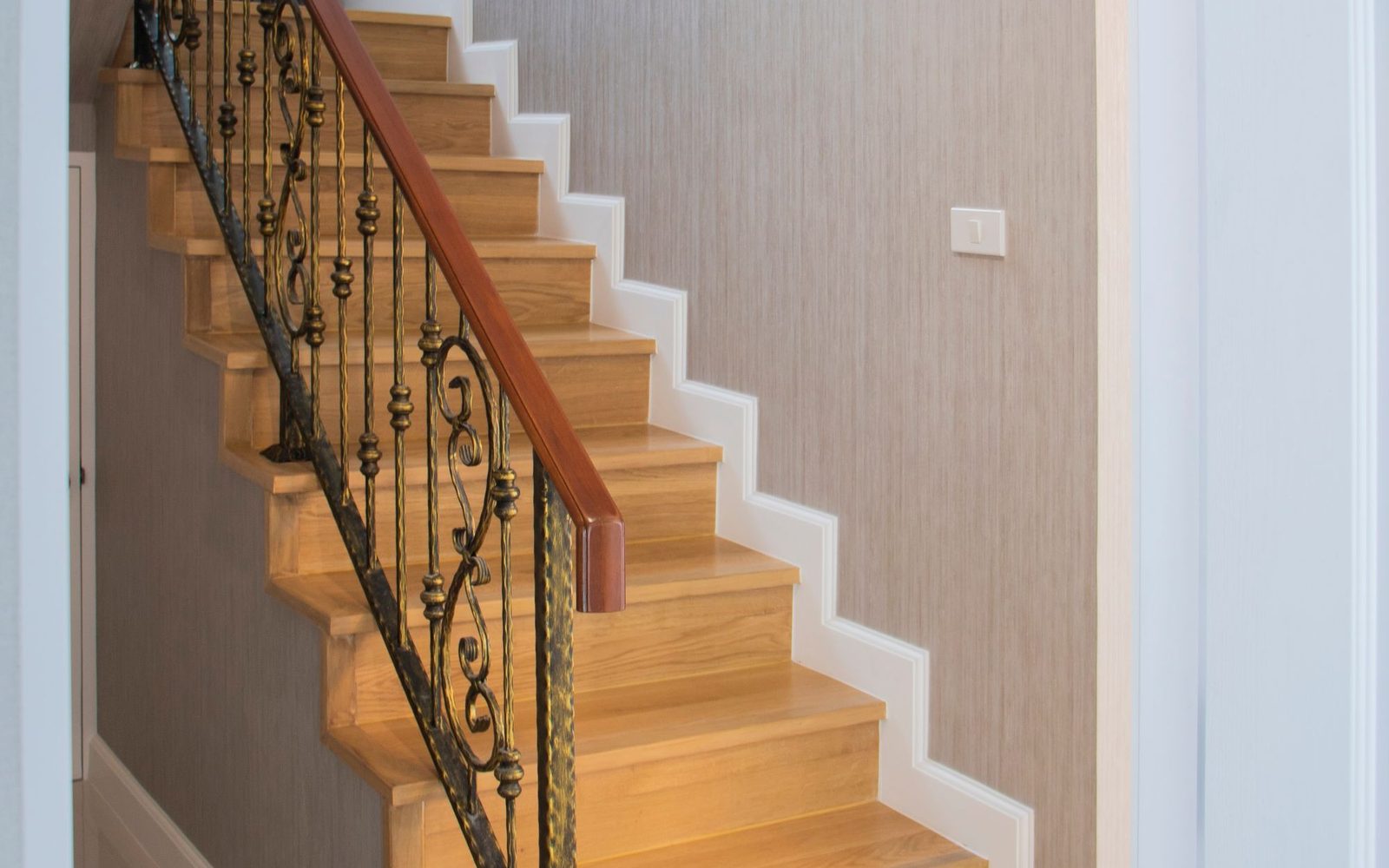
The one piece of joinery everybody touches
A staircase is used more than any other item in a house and judged the moment somebody walks through the door. Replacing one is also the job where measuring matters most: the flight has to land where the floor opening allows, clear the ceiling above, and hit legal rise and going figures at the same time. That is why a bespoke flight is drawn from a site measure rather than picked off a page, and why the price sits between £2,000 and £6,000 rather than at a single headline number.
What the price covers
- Survey and setting out: floor-to-floor height, opening size, headroom and the shape the room allows, worked out before any timber is cut.
- Workshop manufacture: strings, treads, risers, newels, spindles and handrail machined to the drawing, not trimmed to fit on the day.
- Removal of the old flight: stripped out, with the landing and floor made good where the new one meets it.
- Installation to Part K: maximum rise, minimum going, 2m headroom and guarding with a 100mm sphere gap on the balustrade.
- Balustrade and finish: newels, spindles and handrail fitted, with painting or staining either included or clearly excluded.
What moves the price
Shape first: a straight flight is the cheapest thing to build, a single winder adds real work, and a double winder or a curved flight moves the job into the top of the range. Timber second: paint-grade redwood or tulipwood is the value option, while an oak or ash flight with a matching handrail can double the material bill. Then the details, which is where quotes usually diverge, so compare them line by line: glass or steel balustrade panels, box strings against cut strings, oak nosings on an open-plan design, and whether the old staircase removal and the making good afterwards are actually in the figure. The cost guide shows how those choices stack up.
Stairs in older Teesside houses
Terraced houses across Middlesbrough, Stockton and Hartlepool often keep their original flights, and the usual brief is repair rather than replacement: creaking treads wedged and glued from underneath, a split string repaired, a worn nosing let in, or a lost newel cap turned to match. Where a flight is genuinely past saving, matching the moulding profiles of the period is the difference between a new staircase and an obviously new staircase. Loft conversions are the other common trigger, since the new flight has to satisfy headroom and fire escape requirements as well as fit the space that is left. Either way, skirting and architrave around the stairwell usually need attention at the same time.