Fitted wardrobes in Teesside
Fitted wardrobes in Teesside cost £1,500 to £4,000 for a typical bedroom wall in 2026: carcasses, doors and internals made to the measurements of your room, scribed to skirting, chimney breasts and sloping ceilings so there is no dead space left behind.
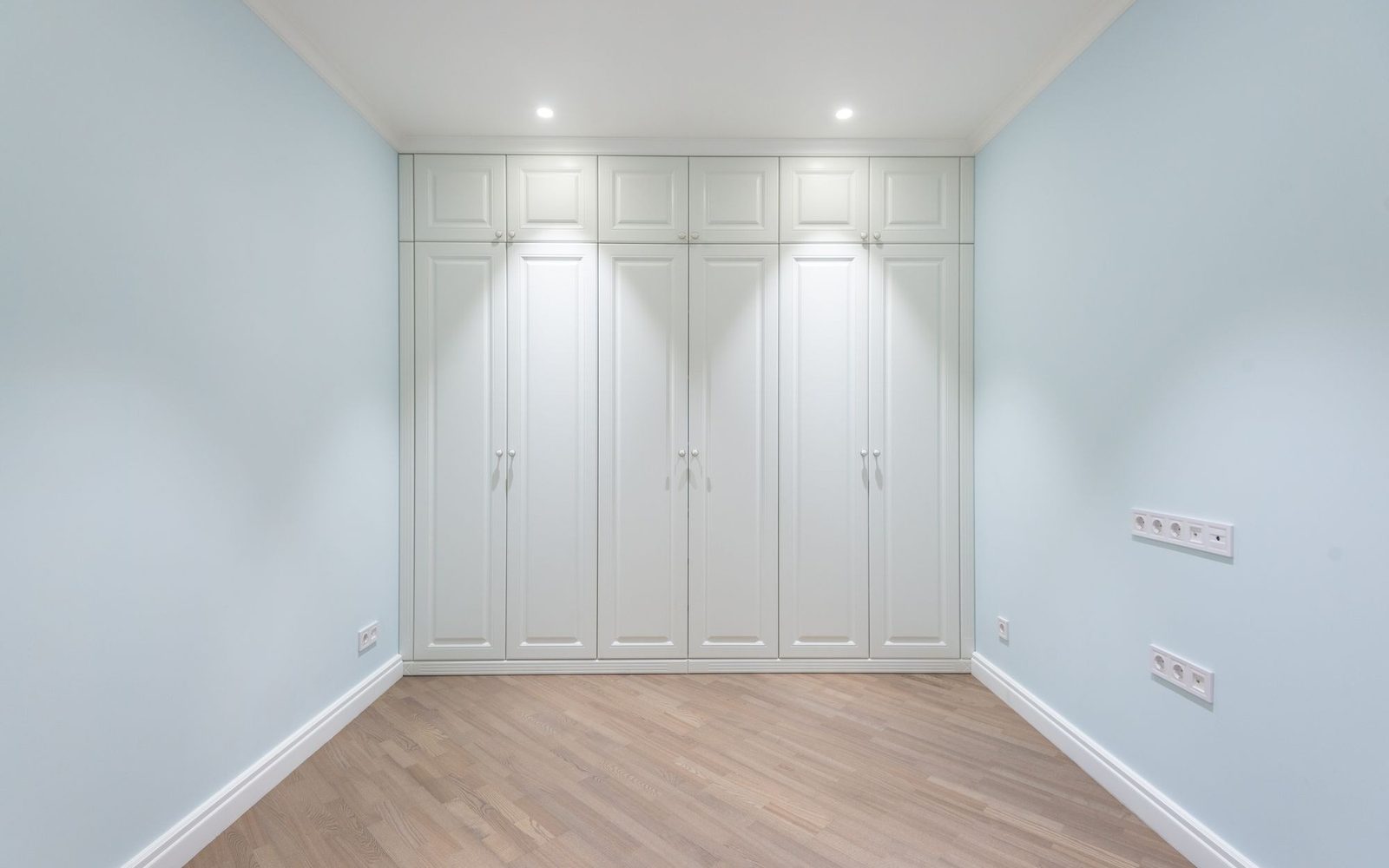
Storage that uses the room you actually have
Bedrooms in this part of the world are rarely tidy rectangles. The semis in Billingham, Acklam and Thornaby put a chimney breast in the middle of the best wall. Terraced back bedrooms are narrow with a bulkhead over the stairs. Dormer rooms and loft conversions slope away exactly where a standard wardrobe wants to be tall. Fitted joinery answers all of that by treating the awkward bits as the design rather than the problem: alcoves either side of the breast, drawers under the slope, a hanging rail set at the height the ceiling allows.
What the price covers
- Site measure and layout: hanging, shelving and drawer split agreed before manufacture, so the internals suit what you own.
- Carcassing: built and installed level and plumb even where the floor and walls are not, then scribed to skirting and cornice.
- Doors and fronts: hinged, sliding or panelled to match the room, with soft-close hardware as standard on most quotes.
- Internals: rails, adjustable shelves, drawer boxes, shoe racks and lighting where you want them.
- Finish: spray finished or supplied paint ready, with the choice stated clearly in the price.
What moves the price
Run length is the base figure, then the front is the biggest variable: plain painted MDF doors sit at the bottom of the range, shaker panels in the middle, and veneered or sliding systems with mirrored panels at the top. Internals do more than people expect, because every drawer box is a small piece of furniture in its own right. Height matters too, since taking the units to the ceiling adds material but removes the dust shelf everybody hates. And genuinely awkward rooms, meaning eaves, bulkheads and walls that lean, take longer to scribe and that time is honest labour rather than padding. The fitted versus freestanding guide covers when the spend is worth it.
Fitted or freestanding
Fitted wins where the room is irregular, where the ceiling is high enough to waste, or where you want a seamless painted wall of storage. Freestanding wins where the room is square and standard, where you rent, or where you expect to move and take the furniture with you. A good joiner will say so rather than sell you the bigger job, and the same reasoning applies to alcove units and other bespoke storage elsewhere in the house.